eXTReMe Tracker

15 November 2009

The University of the Philippines confers the degree of Doctor of Laws honoris causa on Thailand’s Princess Maha Chakri Sirindhorn

The Philippines’ National University, the University of the Philippines, will confer the degree of Doctor of Laws honoris causa upon Thailand’s Princess Maha Chakri Sirindhorn on November 17, 2009 at UP Los Baños for her achievements as a global leader in sustainable rural and agricultural development and in promoting education and science to improve the lives of farming communities in Asia and the world.
Following the footsteps of her father, King Bhumibol Adulyadej, she has been promoting the interest of resource-poor farmers in Asia. Through the conferment of the degree, UP recognizes the Princess’s support for research in natural resource management and agricultural science, for the rural development projects of the King as Chair of the Chaipattana Foundation, and for her initiatives in conserving the plant genetic resources of Thailand.

UP also cites the Princess’s involvement in philanthropic organizations and foundations that support education, child nutrition, and the dissemination of knowledge. Her Royal Highness led the establishment of commemorative public libraries in towns and cities in Thailand, the institution of a National Iron Deficiency Disorder Control Program, and the use of remote sensing in natural resource surveys.

Princess Sirindhorn has worked to build educational and academic cooperation with other countries such as China, and is an eminent advocate and supporter of non-profit institutions engaged in research and development, such as the UP Los Baños-based International Rice Research Institute.

Princess Sirindhorn was a recipient of the Ramon Magsaysay Award for Public Service in 1991. Her honorary degree from UP will be the first from a Philippine university. She had received honorary degrees in Veterinary Medicine, Environmental Science, Regional Development Strategies, Humane Letters, Public Health, Information Technology, Pharmacy, Botany, Agriculture, and Geography, among others from other universities in Thailand, China and Australia, such as Chulalongkorn, Thammasat, Chiang Mai, Beijing and Queensland.

The conferment ceremony, hosted by UPLB Chancellor Luis Rey Velasco, will be held at the Narra Hall of the Training Center for Tropical Resources and Ecosystems Sustainability, College of Forestry and Natural Resources, UPLB, starting at 8:30 a.m. The UP Board of Regents, the highest governing body of the University, co-chaired by UP President Emerlinda Roman and Commission on Higher Education Chair Emmanuel Angeles, will confer the degree on the popular and well-loved princess. (Jo Florendo Lontoc, UP SIO)

19 October 2009

armando lao's directorial debut BIYAHENG LUPA (soliloquy) premieres at CINEMANILA 2009

http://cinemanila.org/wp-content/uploads/2009/09/BIYAHENG-LUPA.jpg

Screening Schedule

08:00PM October 19, Monday Cinema 6
04:30PM October 23, Friday Cinema 6

CINEMANILA 2009 is presented by:

Labels: , , , ,

Link

15 October 2009

andreo calonzo & sophia dedace of gma 7 on UP engineering forum on the flood

Downstream, no time to escape a dam's deluge

Before the flood came the siren.

In the midst of Typhoon Pepeng’s powerful downpour, Gerald Lomibao, 23, a resident of Binmaley, a town four hours drive from San Roque Dam, heard the siren. Then barangay tanods rushed by to remind him that the siren meant that the dam was about to release water and Gerald and his family had three hours to evacuate to higher ground.

But in 15 minutes the flood had arrived, creeping steadily higher until the Lomibao family had to flee to an upper floor.“Kinagabihan, lubog na ang ground floor namin," Gerald told GMANews.TV in a phone interview. “Hindi naman po namin maiwan mga gamit namin. Wala rin kaming mapupuntahan dahil napapaligiran kami ng palaisdaan,"

As the worst floods in the history of Pangasinan slowly subside, and residents ponder their ruined homes and property, the inadequacy of warning given by both the dam operators and local governments is only one of the issues spurring outrage from residents, senators, and activists.

Water released from San Roque Dam has been blamed for the massive flooding of many towns and cities in Pangasinan, including Rosales City. GMANews.TV
Pangasinan’s provincial government and Senator Chiz Escudero have threatened to file law suits against the San Roque Power Corporation, which operates the dam along the Agno River, and the National Power Corporation that owns it. Senate hearings began Wednesday morning on the role the dam’s water release played in the flood.

The region received a record amount of rainfall last week, compelling the dam operators to release enormous flows of water that eventually found its way into the homes of the Lomibaos and ten of thousands of Pangasinan residents. Not releasing the water would have risked overflowing and collapsing the dam, a far greater catastrophe.

“With or without the dam, babaha talaga. Basta sa amin, ginawa lang namin ang standard operating procedure," said Romualdo Beltran, the director for Dam, Reservoirs and Waterways Division the National Power Corporation (Napocor), which owns the San Roque Dam. Beltran spoke at a forum on the flood at the University of the Philippines Diliman campus on Tuesday.

Stranded commuters on board passenger buses and and other vehicles wait to be rescued last Friday from the rising flood waters in Carmen town in Pangasinan. AP
Engineering professors at the forum did not question the need to release the water but its timing.

"Why did they have to wait for the water to almost overflow before opening the gates?" Guillermo Tabios III of the National Hydraulic Research Center asked. “Dapat October 4 pa lang, when the waters exceeded 280 meters, nagpakawala na (They should have released water as early as October 4, when the water already exceeded 280 meters)."

Beltran said no one knew that Pepeng would bring a 100 year rain, meaning rainfall that occurs only once every century. The heaviness of the downpour filled up the reservoir so quickly that all six gates of the dam had to be opened.

“Naka-full load na ‘yung planta. Wala talaga kaming magagawa kundi mag-spill and to let the flood flow. Kung iko-contain mo ‘yun, mag-ooverflow," he said.

Trapped residents stay on top of a roof in Carmen town Friday as lingering typhoon 'Pepeng' submerge many portions of Pangasinan. AP
Pangasinan provincial administrator Rafael Baraan, in the midst of relief operations in his still-flooded province, lamented the rate of release.

“Sinabi naman nila na they will release water by Thursday afternoon. Ang sinabi nila, they would release 2,500 cubic meters per second. Pero by 3 a.m. to 7 a.m. Friday, 5,072 cubic meters na ang nire-release nila," Baraan told GMANews.TV in a phone interview.

(They told us they will release water by Thursday afternoon. They said they would release 2,500 cubic meters per second. But by 3 a.m. to 7 a.m. Friday, they were already releasing 5,072 cubic meters of water.)

“Why would they release so much water in so little time?"

It’s that same water that Gerald Lomibao and his family had no time to escape. At the time of this posting Wednesday evening, the Lomibaos and four other families were huddled on the second floor of the Lomibao home, with waist-deep water barely moving on the ground floor.– ANDREO CALONZO and SOPHIA DEDACE, GMANews.TV
http://www.gmanews.tv/story/174656/downstream-no-time-to-escape-a-dams-deluge
Link

28 September 2009

UP college of arts and letters is accepting donations to victims of typhoon ondoy

You may send donations to the UP College of Arts & Letters New Bldg., between Vargas Museum & Palma Hall, behind Bulwagang Rizal (Faculty Center), University of the Philippines, Diliman, Quezon City. Hotline: 09296454102 (Prof. Roselle Pineda).Look for: The Guard on Duty. Operations: 24 hours until Wednesday. You may donate medicines, clothes, blankets, food.

Donations will be distributed by Citizens’ Disaster Response Center.

2907524.jpg (600×380)
Photo: REUTERS
Photo

Rescuers from the Philippine Navy carry a victim of flash floods caused by Typhoon Ondoy at Provident Village in Marikina City, Metro Manila September 27, 2009.

REUTERS/Cheryl Ravelo

Photo

Residents sit on a rubber boat as they are evacuated from floodwaters caused by Typhoon Ondoy in Cainta Rizal east of Manila September 27, 2009.

REUTERS/Erik de Castro

Photo

A woman wades in floodwaters caused by Typhoon Ondoy in Cainta Rizal east of Manila September 27, 2009.

REUTERS/Erik de Castro

Photo

Rescuers evacuate residents from floodwaters caused by Typhoon Ondoy on a rubber boat in Cainta Rizal east of Manila September 27, 2009.

REUTERS/Erik de Castro


Photo

Rescuers assist residents from floodwaters caused by Typhoon Ondoy as they board a rubber boat in Cainta Rizal east of Manila September 27, 2009.

REUTERS/Erik de Castro


Photo

Residents wade in floodwaters caused by Typhoon Ondoy in Cainta Rizal east of Manila September 27, 2009.

REUTERS/Erik de Castro

Photo

A Philippine Air Force aerial shot shows floodwaters caused by continuous rains brought by Typhoon Ondoy in Cainta Rizal, east of Manila September 27, 2009.

REUTERS/Rey Bruna/Philippines Airforce/Handout

Photo

A resident wades the floodwaters caused by Typhoon Ondoy in front of an advertising billboard in Cainta Rizal east of Manila September 27, 2009.

REUTERS/Erik de Castro

Labels: , ,

21 September 2009

Philippine Star: Kimmy Dora is the number one movie of the week !

September 10, 2009 04:23 PM

MANILA, Philippines -- Kimmy Dora, landed on the number slot among all the movies that came out last September 2. The first solo starrer of comedienne Eugene Domingo, lead the pack of 6 releases, which included four Hollywood and one local films.

“We are very happy to be working with Spring Films and with the outstanding box office performance of Kimmy Dora,” said Wilson Tieng, President of Solar Entertainment Corporation.

As the film’s distributor, Solar Entertainment made sure the movie was available on 90 screens in 89 locations nationwide. With heavy exposure on its’ three TV channels, Jack TV, ETC and 2nd Ave, the film was able to penetrate the AB market as evident on the 10 top performing sites for the film: (1) Glorietta 4 (2) SM Megamall (3) Trinoma Cinemas (4) SM North Edsa (5) SM Mall of Asia (6) Robinsons Place Manila (7) Gateway Cineplex (8) Robinsons Galleria (9) SM San Lazaro (10) Market, Market.

Kimmy Dora is produced by Spring Films and distributed by Solar Entertainment Corporation and is now on it’s second week nationwide screening.

university of the philippines theater arts alumna eugene domingo is KIMMY DORA. KIMMY DORA was written by prizewinning U.P. alumnus chris martinez

Labels: , , ,

Link

13 September 2009

university of the philippines college of mass communication student pepe diokno wins 2 prizes @ venice film festival

university of the philippines college of mass communication student pepe diokno won the orrizonti and the luigi de laurentiis prizes during last night's venice film festival awarding ceremonies.

pepe is the son of UP creative writing professor divina diokno, nephew of UP history professor and former vice president for academic affairs maria serena diokno, and grandson of filipino nationalist and senator jose w. diokno.

***

66th Venice Film Festival
Venice Biennale
12 September 2009

Official Awards
The 66th Venice International Film Festival ran 2nd to 12th September 2009.
The International Juries awarded the following prizes:

Venezia 66
- Golden Lion for best film: Lebanon by Samuel MAOZ (Israel, France, Germany)
- Silver Lion for best director: Shirin NESHAT for the film Zanan Bedone Mardan (Women Without Men) (Germany, Austria, France)
- Special Jury Prize: Soul Kitchen by Fatih AKIN (Germany)
- Coppa Volpi for Best Actor: Colin FIRTH in the film A Single Man by Tom FORD (USA)
- Coppa Volpi for Best Actress: Ksenia RAPPOPORT in the film La doppia ora by Giuseppe CAPOTONDI (Italy)
- “Marcello Mastroianni” Award for Best New Young Actor or Actress: Jasmine TRINCAin the film Il grande sogno by Michele PLACIDO (Italy)
- "Osella" for Best Technical Contribution: Sylvie OLIVÉ for the film Mr. Nobody by Jaco VAN DORMAEL (France)
- "Osella" for Best Screenplay: Todd SOLONDZ for the film Life during Wartime by Todd SOLONDZ (USA)


Orizzonti
- Orizzonti Prize to Engkwentro by Pepe Diokno (Philippines)
- Orizzonti Prize for Best documentary to 1428 by DU Haibin (China)
- Special Mention to Aadmi ki aurat aur anya kahaniya (The Man’s Woman and Other Stories) by Amit Dutta (India)


Controcampo Italiano
Controcampo Italiano Prize to: Cosmonauta by Susanna NICCHIARELLI (Italy)
Kodak will offer to the awarded director 40,000 euros in negative film stock - 35 or 16mm, chosen by the winner - to shoot a new feature film.
- Special Mention: Negli occhi by Daniele ANZELLOTTI and Francesco DEL GROSSO (Italy)


Corto Cortissimo (Prizes awarded on 10th September 2009)
- Corto Cortissimo Lion for Best Short Film to Eersgeborene (First Born) by Etienne Kallos (South Africa, USA)
- Venice Nomination to the European Film Awards 2009 to Sinner by Meni Philip (Israel)
- Special Mention to Felicità by Salomé Aleksi (Georgia)


“Luigi De Laurentiis” Award for a Debut Film
- Lion of the Future – “Luigi De Laurentiis” Venice Award for a Debut Film to Engkwentro by Pepe DIOKNO (Philippines) - ORIZZONTI
as well as a prize of 100,000 USD, donated by Filmauro, to be divided equally between director and producer


Persol 3-D Award for the Best 3-D Stereoscopic Film of the Year (Prize awarded on 11th September 2009)
- Persol 3-D Award: The Hole by Joe Dante (USA)


***

‘Engkwentro’ bags Venice filmfest prize
By Bayani San Diego Jr.
Philippine Daily Inquirer
First Posted 18:50:00 09/13/2009

MANILA, Philippines -- Filipino filmmaker Pepe Diokno’s “Engkwentro” won the top prize in the Orizzonti (New Horizons) section of the 66th Venice International Film Festival.

Diokno, who received the award in the Italian city, confirmed his triumph in a text message to the Inquirer Sunday morning.

He competed with 24 other films from Vietnam, Egypt, Peru, Russia, Tunisia, Italy, China, Germany and the United States, among others.

In 2008, another Filipino filmmaker, Lav Diaz, won the top prize for “Melancholia" in Orizzonti as well.

Apart from the top prize in the section earmarked for “new trends in cinema,” Diokno also won the Luigi De Laurentiis Lion of the Future award, which comes with a cash prize of US$100,000.

The award is given to a debuting filmmaker and the cash prize, donated by distributor Filmauro, is to be divided between the director and the producer, according to the web site of the world’s oldest festival.

Screen Daily.com reported that jury president, director Haile Gerima, presented the Lion of the Future award to Diokno.

According to the Venice fest web site, the jury “unanimously decided” to give the award to Diokno.

Another Filipino film, Brillante Mendoza’s “Lola,” competed in the festival’s main section. Although “Lola” failed to bring home a prize, it merited “good reviews from critics,” co-producer Ferdy Lapus said in a text message.

In an interview held before his trip to Italy, Diokno told the Inquirer that being selected for the Orizzonti was “overwhelming in itself.”

“Programmer Paolo Bertolin told me that I am one of the youngest filmmakers to join the Orizzonti,” Diokno said.

“Engkwentro” earlier won a special mention prize in this year’s Cinemalaya digital film festival. It’s his first film.

Laurice Guillen, competition director of Cinemalaya, said “Engkwentro” won a special prize “to cite Pepe’s achievement at such a young age.” Diokno turned 22 last Aug. 13.

His father, Jose Manuel Diokno, told the Inquirer: “We’re ecstatic. Pepe texted and he’s very glad. He was surprised . . . if not equally shocked as we are. His only objective before he left for Europe was to meet filmmakers, watch movies and hopefully get support for his next film. This is unexpected.”

“I am very happy for Pepe,” Guillen said. “ ‘Engkwentro’ elicited very mixed reactions when it was shown at the Cinemalaya in July. But I felt it was precisely this kind of film that gives Cinemalaya its credibility. Films like ‘Engkwentro’ push its definitions further. It is in the realm of documentary, but it’s a feature film.”

Ed Cabagnot, Cinemalaya festival programmer, remarked: “It’s simply amazing. Pepe was this year’s ‘bad boy.’ He had all sorts of problems while making the film. But we were secretly rooting for him because we knew his passion will see him through. We need films that are out of the box.”

Diokno explained that his debut film was “set against the backdrop of vigilante killings in the country, a problem investigated by the United Nations and the Philippine Commission on Human Rights.”

“Engkwentro” tells the story of two teenage brothers, Richard (Felix Roco) and Raymond (Daniel Medrana), who find themselves on opposite sides of a gang war. Complications arise when one is tasked to kill the other.

Diokno asserted that “Engkwentro” is not just about the “death squads of Davao City.” “It’s not set in a specific city. It’s a national problem. That’s why the characters speak in Tagalog, Cebuano, Ilonggo and Pangasinense, to create an unnamed hybrid city.”

The young filmmaker, who’s the grandson of the late senator and human rights advocate Jose Diokno, conceded that he found inspiration for the film while doing a documentary in a Davao-based detention facility in 2007. “I met two brothers, Richard and Raymond, members of rival gangs that are being hunted down by vigilante squads.”

In the last decade, he said, “over 814 people have been murdered by assassins allegedly sponsored by the state. Reports say many of the victims are minors –including gang members, petty criminals and street children.”

He said being in Venice made the hardships he had experienced during the shoot worthwhile.

His father said: “Pepe worked hard to finish this movie. He gave his all to this film.”

The young filmmaker acknowledged that it “was a complicated, challenging shoot. We had to build a set: a 2,000 square-meter squatter’s area in Sta. Ana, near Makati. We had some 500 extras in the film. We had to rehearse a lot.”

He corrected the impression that the 61-minute film was done with one long take. “Actually, there were 51 cuts, but we had to digitally erase the cuts and make it look seamless. We wanted to make it appear continuous, as if it was one long tracking shot.”

In reality, the film was shot in three months in three different cities.

“The sound design was recreated entirely in post-production,” recalled Diokno. Sound designer Mark Laccay “built the film’s audioscape from the ground up.”

Before leaving for Venice, he said that his biggest goal was to meet his idols: documentarian Michael Moore, filmmaker Steven Soderbergh and animator John Lasseter who were all participating in the Italian festival.

“It’s exciting to be part of the Venice film fest—especially in a section that highlights new trends in filmmaking,” he said. “I want to see how the other directors treated their films. I’m curious as to how foreign audiences would respond to my film.”

He owned up that his film drew mixed feedback from local audiences. “It sparked strong reactions. It’s either they liked or hated it for various reasons. I think it’s because of the film’s style.”

But that’s precisely his goal, he said.

“We are trying to provoke discussion. All reactions, whether good or bad, are welcome—for as long as it contributes to a healthy debate,” he noted.

Guillen pointed out: “It is [an audience] in cultures like the Italians’, which excelled in filmmaking in the 1950s, that will appreciate ‘Engkwentro.’ They are very familiar with art films. To see a film like ‘Engkwentro,’ which tells its story confidently, but with irreverence to art . . . that, I suppose, is what challenges them.”

Labels: , ,

Link

03 August 2009

filipino scholar Rey Ileto's PASYON AT REBOLUSYON in Sojourn: Journal of Issues in S.E. Asia's list of THE MOST INFLUENTIAL BOOKS OF SOUTHEAST ASIA


SOJOURN: Journal of Social Issues in Southeast Asia Vol. 24/1 (April 2009)
Special Focus on "The Most Influential Books of Southeast Asia"

From Hui Yew-Foong, editor

Editor’s Note

The Most Influential Books of
Southeast Asian Studies

A brief note is in order to explain this special issue, which is quite unlike most special issues of journals. To mark the 40th Anniversary of the Institute of Southeast Asian Studies in 2008, the editorial team of SOJOURN decided to come up with a list of “Ten Most Influential Books on Southeast Asia”. The idea seems straightforward, but the discerning will quickly realize that generating such a list is an encounter with controversy at every turn.

We decided to pass the conundrum to our eminent International Advisory Members (IAM). They were each invited to nominate ten books that:

a) have influenced theory formation and/or empirical perceptions in Southeast Asia;
b) continue to serve as pivotal reference points for contemporary scholars; and
c) transcend the period they were written in.

Most of the IAM responded, some with more than ten nominations, and some with less; and some, with good reason, declined to send in their nominations. Altogether, forty-five books were nominated. Because some books tied in the number of nominations they received, we ended up with a “Top 14” list rather than a “Top 10” list, which has been reproduced below.

Any such list, as mentioned earlier, is bound to be controversial because of the biases involved. There is, first, the bias implicit in the criteria we gave the IAM. For example, we had asked that they nominate books written in English. This seemingly straightforward request already privileges books over other forms of influential publication, and even more controversially, English publications over much excellent scholarship not available in English. (Nevertheless, some IAM still felt compelled to send us nominations of books in non-English languages, which we gladly accepted.) Second, the biases of the IAM would, quite necessarily, be reflected in their choices of books, whether these be due to their training or areas of expertise. Instead of seeing this as a limitation, we see this as an opportunity to tap on a broad base of collective wisdom. Towards this end, we have decided to display the entire nominations list instead of just the most popular ones. To students and scholars of Southeast Asia, we offer this list as a resource.

Needless to say, there are probably methodologically more rigorous ways to go about this. For example, we could have extended the vote to the scholarly community at large. Or, instead of asking for nominations of books, ask for nominations of the most influential scholars, which would bring to the fore an assessment of their oeuvre instead of just one or two books. Nevertheless, with our limited resources, we have decided to initiate this limited first effort as a service to the scholarly community on Southeast Asian Studies. We do not expect everyone, or in fact, anyone, to agree with the entire list. In fact, we would be happier if the list generates debate rather than quiet acquiescence. The verdict, in the end, on which books are the most influential should lie, not with us at SOJOURN, but with the discerning reader.

As a guide to some of the most influential ideas embedded in what has been considered the most influential books, the editorial team has also undertaken, according to individual expertise and inclinations to write review essays on selected books. We regret that not all books can be reviewed, but do hope that what we have lined up would serve as a good introduction. Finally, we would like to thank our IAM, which had graciously offered us the benefit of their collective expertise in the drawing up of this list.

The Most Influential Books of Southeast Asia

Furnivall, J.S. Colonial Policy and Practice: A Comparative Study of Burma and Netherlands India. Cambridge: Cambridge University Press, 1948.

Reid, Anthony. Southeast Asia in the Age of Commerce, 1450–1680. 2 Volumes. New Haven: Yale University Press, 1988–1993.

Scott, James C. The Moral Economy of the Peasant: Rebellion and Subsistence in Southeast Asia. New Haven: Yale University Press, 1976.

Anderson, Benedict R.O’G. Imagined Communities: Reflections on the Origin and Spread of Nationalism. London, New York: Verso, 1991 (1983).

Geertz, Clifford. Agricultural Involution: The Process of Ecological Change in Indonesia. Berkeley and Los Angeles, California: University of California Press, 1963.

Ileto, Reynaldo Clemeña. Pasyon and Revolution: Popular Movements in the Philippines, 1840–1910. Quezon City: Ateneo de Manila University Press, 1979.
Leach, Edmund Ronald. Political Systems of Highland Burma: A Study of Kachin Social Structure. London: G. Bell & Sons, Ltd., 1954.

Scott, James C. Weapons of the Weak: Everyday Forms of Peasant Resistance. New Haven: Yale University Press, 1985.

Geertz, Clifford. The Religion of Java. Glencoe, Ill.: Free Press, 1960.

Kahin, George McTurnan. Nationalism and Revolution in Indonesia. Ithaca, N.Y.: Cornell University Press, 1952.

Roff, William R. The Origins of Malay Nationalism. New Haven: Yale University Press, 1967.

Leur, J.C. van. Indonesian Trade and Society: Essays in Asian Social and Economic History. The Hague: W. Van Hoeve, 1955.

Wertheim, W.F. Indonesian Society in Transition: A Study of Social Change. Bandung: Sumur Bandung, 1956.

Wertheim, W.F. East-West Parallels: Sociological Approaches to Modern Asia. The Hague: W. Van Hoeve, 1964.

HUI Yew-Foong


SOJOURN: Journal of Social Issues in Southeast Asia Vol. 24/1 (April 2009). Special Focus on "The Most Influential Books of Southeast Asia"

http://i47.photobucket.com/albums/f199/surfsam/iaha%20conference%20manila%20nov%2018-28%202006/wNUSpeople.jpg
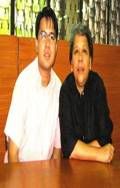
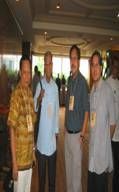
trina pineda tinio, jose wendell capili, mercedes planta and prof. reynaldo ileto at the international association of historians of asia (iaha) conference, hotel intercontinental manila (november 2006)


Labels: , ,

Link